


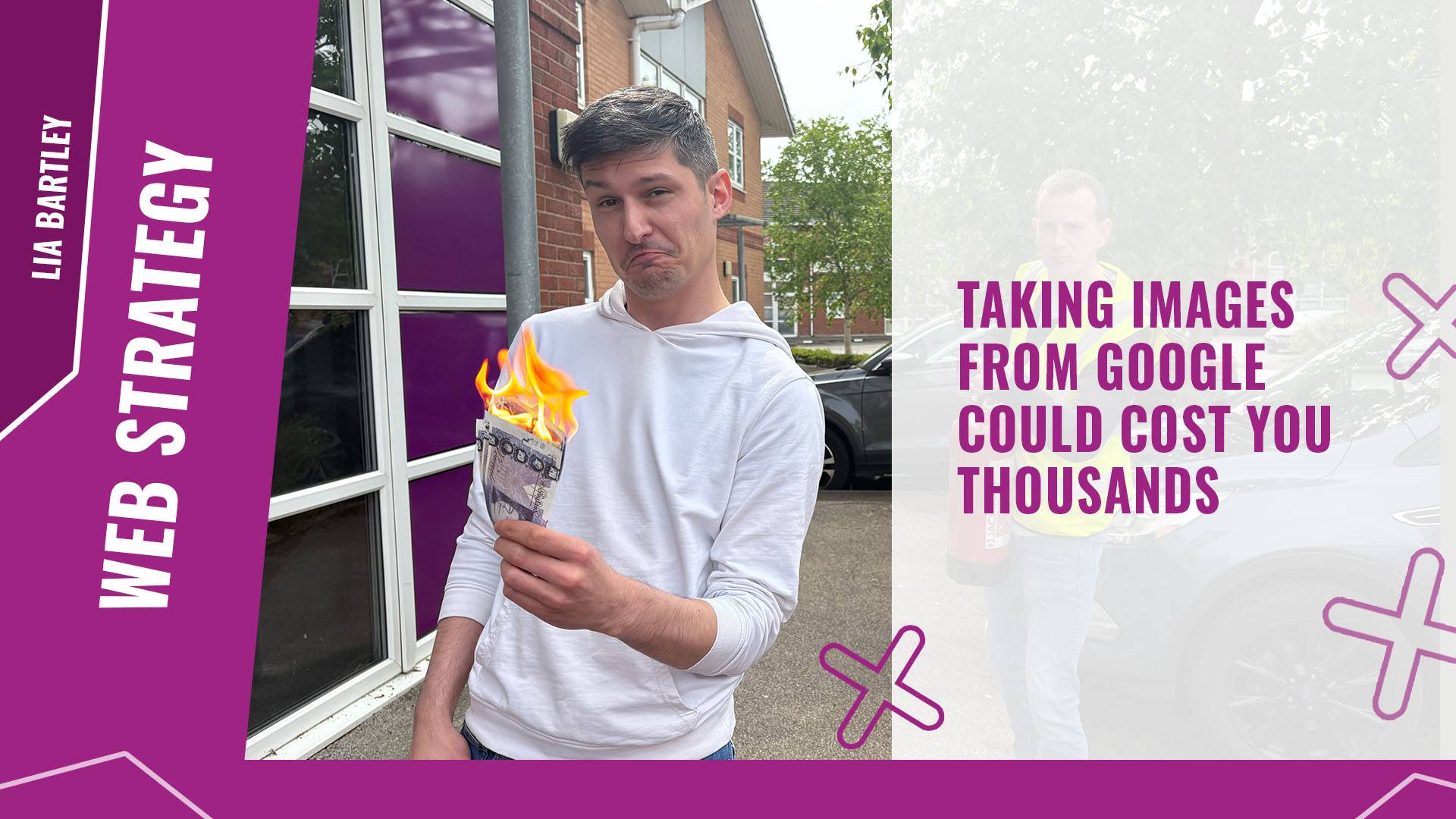
As a busy entrepreneur running a website, it’s all too easy to gloss over the details. One of the most common – and expensive – mistakes that business owners make is to assume that just because an image appears on Google, it is available for use.
You may be familiar with companies like Shutterstock, Getty Images, and iStock, as their photos appear so high on Google search. You may have used some of these images yourself. But the photos aren’t free to use – they are copyrighted.
Worse yet, these companies don’t normally tell you right away. Instead, they employ the image in order to discover your website by doing a reverse image search. They then record the date on which you originally used the picture, and… they wait. Sometimes six months, a year, a year or longer.
Then, they send unsuspecting website owners a bill demanding payment – often in the thousands, depending on the length of time the recipient has inadvertently used the image.
These businesses don’t care that you didn’t understand, or that you used it after a search on Google. They care about you taking advantage of their work without compensation.
Many businessowners wrongly believe that Google Images is a free database, but it isn’t. It’s an image search engine, and it doesn’t own the pictures it displays. In fact, these images are typically stolen from professional photographers, blogs, stock libraries and news websites.
So even if you grab the photo and resize it, cut it, edit it on Canva, or place text upon it—it’s still a copyrighted image unless indicated otherwise.
These photography licensing companies have solid software and aggressive legal teams. They don’t give you a pleasant letter to remove the photograph. Instead, they will send you bills accompanied by legal documentation and calculated use fees.
These are not just empty threats, either. If you ignore them or don’t pay, you can be brought to court, meaning that this is not just an inconvenience – it’s a threat to your business.
What should I do instead?
Firstly, never use an image that you’ve sourced using Google Image Search on your website.
Instead, use licensed image repositories like Shutterstock, iStock or Adobe Stock.
If you’re hiring a web design or content agency, ask them where they get their images – and make sure they’re licensed properly. If you want to be 100% safe, use royalty-free or Creative Commons photos (but always double-check usage terms).
If you’re not sure, it’s best to play it safe and don’t use it.
Here at Engage Web, our clients never have to worry about getting hit with an unexpected fine, as we handle the licensing on every image we use. To find out more, get in touch with our team today.

- How to increase your chances of appearing in Google AI Overviews - August 21, 2026
- What’s the difference between Google’s AI Mode and AI Overviews? - August 18, 2026
- How to help search engines and AI understand your business - August 12, 2026